
Enter bank reconciliation automation, a game-changer reshaping how businesses manage their finances. Let’s dive in and discover how this technology is not just a tool but a financial revolution…. If you’re a small business owner looking to simplify your financial life, hiring a full charge bookkeeper could be the smartest move. Not only contribution margin will they save you time and stress, but they’ll also set your business up for long-term success.
- To navigate these waters successfully, developing robust financial strategies is essential.
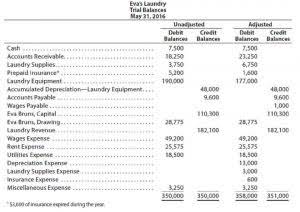
- They perform a month-end closing, running a trial balance to verify that the general ledger isn’t off.
- As mentioned earlier, the primary difference between a full charge and a regular bookkeeper is the fact that full charge bookkeepers manage all the accounting needs of the business.
- While a formal degree in accounting or finance can be positive, becoming a full-charge bookkeeper isn’t always a strict requirement.
- In this role, you may help prepare financial statements and tax returns for your employer, who then submits them to a CPA for review or auditing.
How can Taxfyle help?
A full charge bookkeeper, however, dives into advanced tasks, like financial forecasting and tax preparation. They bridge the full charge bookkeeper meaning gap between bookkeeping services and professional accounting. Although full charge bookkeepers are responsible for a business’s accounting, they are not accountants or Certified Public Accountants. In this role, you may help prepare financial statements and tax returns for your employer, who then submits them to a CPA for review or auditing. This style of bookkeeping is most often found in small to midsize companies. Full charge bookkeeping handles all of the accounting needs of a company.

What is Full Charge Bookkeeping? Do You Need One?
Therefore, a full-charge bookkeeper can handle many different things concerning finances. It is in their job description to perform tasks that fall between basic bookkeeping and accounting. It is a two-in-one role that can be ideal for the needs of certain mid-size businesses and even larger ones, which have relatively simple accounting transactions and don’t need a controller. As businesses grow, so does the need for more comprehensive financial management.
A. Make General Ledger Adjustments:
By analyzing historical financial data, they can help predict future revenue and expenses, which is essential for setting realistic financial goals and resource allocation. Look for a full charge bookkeeper with strong attention to detail and great communication skills. They should be good with accounting software like Microsoft Excel. Deciding between an in-house bookkeeper and outsourced services depends on several factors. Think about your company’s size, financial complexity, and what you need.
Difference between a Full-Charge Bookkeeper and a Regular Bookkeeper
A freelance full charge bookkeeper can quote a fee that follows the industry standards, flexible, of course, based on the scope of the work. For a full charge bookkeeper, the average national salary in the US is $20.57 per hour. However, one may virtual accountant even get in the range of $15.04 to $30.27 in America. Nevertheless, the salaries of the same can differ depending on the place of posting, location of employment, and level of experience.